
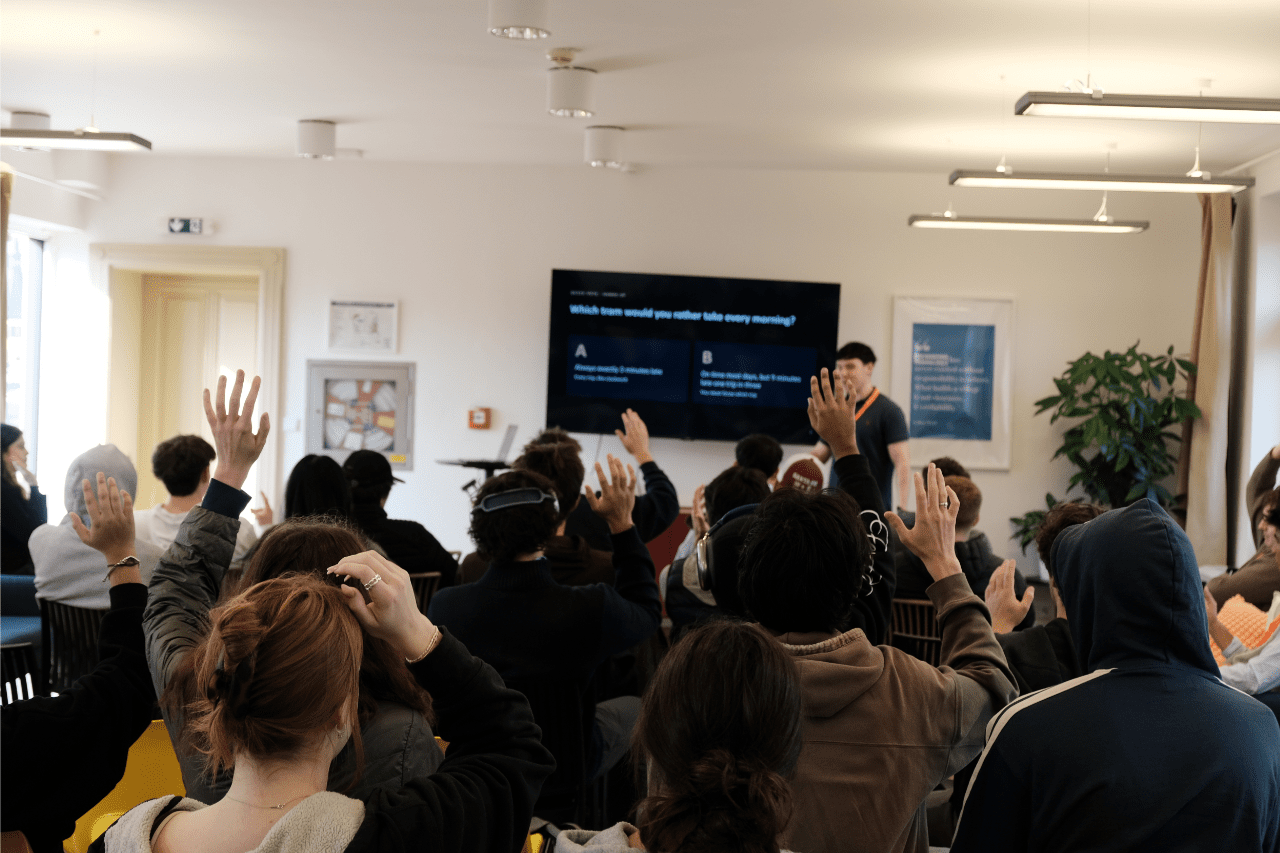

A scoop of gelato in Florence prompted a question about pricing. A ride on the London Underground became the starting point for an investigation into air pollution. And in Seville, students used Las Setas to explore how Newton’s laws apply to a landmark they could walk beneath.
At Verto’s Fall 2026 Global Student Symposium, first-semester undergraduates shared what they were learning through experiences like these. From November 9–13, students in Buenos Aires, Florence, London, Prague, and Seville brought together ideas from their courses, encounters in their host cities, and reflections on how living abroad was changing their perspectives.
Starting with what students noticed
We designed the symposium around three questions: What did you explore? Why did it matter? How did it shape your perspective?
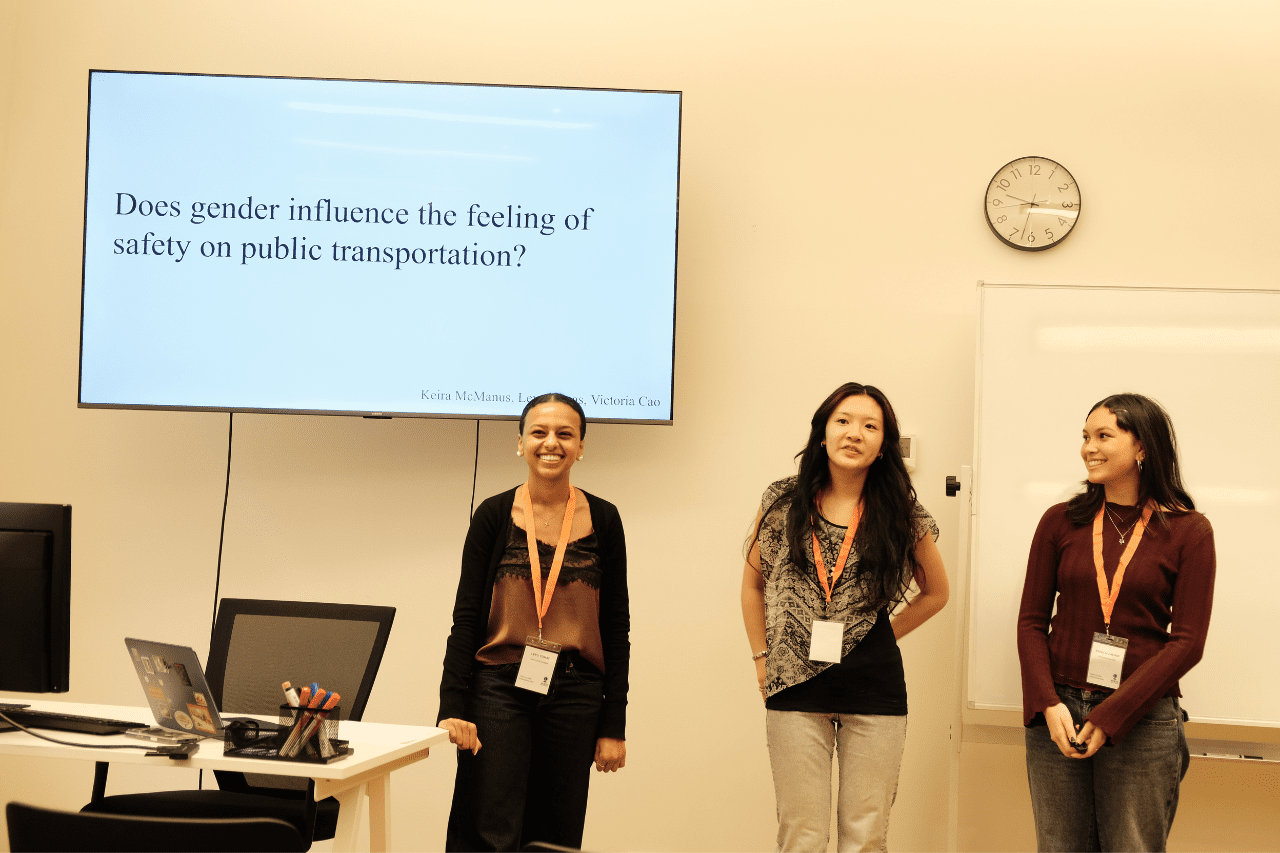
Those questions gave students room to follow their curiosity and choose a format that fit what they wanted to share. In Buenos Aires, students investigated public transit and curated student and local artwork to reconsider how Latin American art history is told. In London, projects ranged from studying brake dust in the Underground to asking why live theater matters in a digital age. In Prague, students made video essays about personal growth and what it meant to be present during a semester abroad.

Most participants approached their presentations as passion projects. They chose topics because something caught their attention, not because a syllabus required it. That curiosity is what we value most about experiential learning. A course can give participants a new way to understand something they encounter in their host city. An encounter in the city can also send them back to class with a question they hadn’t thought to ask.
Learning through the process
The work began well before students stood in front of an audience. They had to decide which questions to pursue, ask for feedback, and figure out how to explain what they had learned. Faculty feedback and drop-in clinics gave them opportunities to revise their ideas and practice sharing them with others.
Those steps are part of what made the experience holistic. A student could deepen their understanding of physics while gaining confidence speaking in public. Making a film could help another student develop a creative skill and reflect on how they wanted to spend the rest of their time abroad. Asking a mentor for feedback gave students practice using academic support early in their college careers.
Showing up for one another
Each presentation ran 15 to 25 minutes and was followed by Q&A with professors and peers. The questions were thoughtful and specific, a sign that the audience had been listening closely and wanted to know more. That kind of support is what our community does best. Participants showed up for each other, cheered each other on, and treated every presentation like it mattered, because it did.
Carrying the experience forward
Each participant earned a Certificate of Participation and a co-curricular point. They also left with something tangible they could share after the semester, whether it was a research poster, an exhibit catalog, a video essay, or a formal abstract.
The symposium gave students a chance to pause and consider what they wanted to carry with them. For some, that might be a question they want to keep investigating. For others, it might be the confidence to share an idea in front of a room or the habit of paying closer attention to an unfamiliar place. Those are things students can bring to their next class, their next community, and wherever they learn next.
